Wednesday, November 19, 2014

Literature Study + Writing = Success

Using Mentor Texts to Improve Writing:
       Many teachers use literature as a component of their writing program. Books can serve as mentor texts which model the qualities of good writing. Mentor texts are pieces of literature that teachers can use to help model quality writing to young writers. Mentor texts can be used in many ways and offer countless teaching possibilities on the craft of writing. They can help students examine sentence structure, discover figurative language, develop vocabulary, make connections, think about how a setting creates a mood, find examples of “showing, not telling”, understand how illustrations support the text, or construct an overall meaning.

       Mentor texts are important because they motivate students by demonstrating the technique, focus, and organization combined into one whole. A student can envision themselves as a writer and can imitate the strategies themselves to guide their own potential. A mentor text gives students an invitation to notice an author’s work which exposes them to an opportunity they might not have explored before. It sparks imagination and determination to empower a writer to try something new. Mentor texts serve as an exemplar and are inspirational to guide the writer on their journey to developing their own style. The combination of teacher, mentor text, and the writer’s own efforts produce quality writing.

      The book, Fox, by Margaret Wild and Ron Brooks, is a picturebook rich in content. The fable tells a story of Dog and Magpie who rely on each other. Along comes fox who is jealous and tries to form a wedge between the friendship of Dog and Magpie. Fox tries to convince Magpie that he is a better suited companion. Will Magpie give into temptation?

Fox by Margaret Wild.jpg   This story is an allegory and takes the reader on an emotional roller coaster ride through love and belonging, temptation, risk and betrayal. The author uses sophisticated language, specific details, and an effective plot. The illustrations are in mixed media and collage with dark markings which expose the characters’ deep feelings.
     This mentor text can help students understand that in order to give life to their characters in a narrative, they need to understand the techniques in order to do so. A writer can develop a character through action, description, dialogue, and through the reactions of other characters.
     The exemplar also shows how setting can impact the plot of a story. Skilled writers learn that the setting can serve various purposes. The setting can create mood, build suspense, and reveal character traits.
     A third teaching point of using this book is to help students establish an effective conflict. The mentor text will explain the internal conflict of a fictional character. Understanding the internal conflict gives students the opportunity to write in an honest, authentic voice. There are many themes, or messages that emerge from the story so teachers can discuss the possibilities with students. Then, students can write an original narrative that addresses one of the themes in Fox.


Tuesday, November 11, 2014

Reflection of The Liberation of Gabriel King

When we think about what good readers do, making connections comes to mind. Students can make text to self, text to text, and text to world connections. I recently read the book, The Liberation of Gabriel King by K.L. Going.
The story is about a friendship that develops between Gabe and Frita. Both rely on each other to overcome their fears. The story takes place in 1976 in Georgia during the time period of integration. African Americans were still being discriminated against and many people of all nationalities stood up in defense. I made many text to self connections as I read this. It reminded me of growing up in Newburgh, New York, during the late 1970s. I attended the Magnet School program at Horizons-on-the-Hudson. The program was intended as a strategy for school desegregation and offered an alternative to the regular school assignment based on neighborhood proximity.  The school offered a specific theme of study and it attracted students with a diverse socio-economic background. I am proud to have been able to attend this school because it expanded my circle of friends. My elementary years included a multi-ethnic community and I gained an appreciation of cultural diversity. What mattered to me most was what was inside of people and not the outside. This perspective has shaped the kind of person that I am today, and I am thankful for this social and educational experience.

Our class had the chance to meet K.L. Going during her presentation about "Writing for Children and Teens: How Author and Reader Explore the World and Humanity". Ms. Going raised the question, "Why is it important to read?" Students read to understand perspectives. Reading allow us to explore who we are and where we come from. It starts a dialogue and raises questions. Reading helps us realize what we can become or what we can learn from. It may also provide healing, understanding, and empathy. Reading empowers students to be their best self. K.L. Going mentioned that her books rotated around core emotions and she focused on creating character driven books. One of her books, Fat Kid Rules the World, has been banned in certain communities for language and some sexual content. This brought up some thoughts about the right of society to ban books. I don't even think the internet is censored as much as literature. Who gives the right for people to decide what should be read or not read? Are we not a democratic society where we have the right to decide for ourselves? If reading allows the opportunity for students to start a dialogue, then isn't it better to discuss feelings rather than restrict them? We need to be able to reach all types of students and allow emotions to be both explored and released in a constructive way. 

Act I: Storytelling

Storytelling is an interesting method to communicate events in words and images by improvising or embellishing. Storytelling is not memorization but internalizing and visualizing a story. This craft meets the set of skills that are needed for literacy including making letter-sound correspondences, the ability to make meaning by making connections, and understanding language (syntax) which comes from oral language. The act of retelling stories can help make children aware of story schema and gain an understanding of narrative structure. Storytelling often uses kinesthetic activities which suit the physical needs of younger students. It can also motivate children and provides them with an aesthetic experience. 
Fox by Margaret Wild.jpg
For example, you can read the story Fox by Margaret Wild and Ron Brooks. The teacher will tell students that they will create a tableaux, or a retell of the story using still pictures created from human bodies and presented to an audience. Within their groups, have one student nominated as the 'sculptor' who moves the other group members into position and gives them instructions on where/how to look during the story retell. Tableaux can be used simply to communicate single ideas/emotions from the story: love and belonging, unity, harmony, power, temptation, betrayal, despair, and redemption. Groups can present their tableaux to the class.


A soundscape has a narrative structure and could be used to retell the story of Fox using sounds and silence. Have groups within the class take responsibility for the different stages of the narrative and then perform these in sequence.


Many urban students come from a culture of storytelling and therefore using it in your classroom is an effective strategy to build on literacy growth. Oral traditions are characteristic of descendants of West Africa and can be empowering to African American children.The oral act of storytelling encourages a sense of community and belonging, as well as preserving cultural roots.The book, The Girl Who Helped Thunder and Other Native American Folktales by James and Joseph Bruchac is an excellent collection of folktales to share with students. The teacher can be an oral storyteller and then students can create a play to retell the folktale. My favorite story from the book is "How Rabbit Got Wisdom" by the Creek or Muskogee people.
The very act of storytelling can fuel the writing process. Storytelling also meets the needs of gifted students through their cognitive, academic, creative, and social/emotional needs.


Storytelling can be used with a flannel board. For example, the story "Teeny-Tiny" is an English jump tale. In a jump tale, the final words are said suddenly as the storyteller jumps toward the audience. It is a perfect story for a novice storyteller like me. The story has a mix of frightening plot and ridiculous verbal style. I


Fun with Historical Fiction


Historical Fiction Presentation


Monday, October 13, 2014

How to Escape a Hard World - Read Fantastical Literature!

Fantastical literature includes the genre of fantasy and science fiction. Fantasy authors use imaginative narratives that explore alternate realities. They suspend scientific explanations and natural laws which make the impossible seem plausible. Fantasy writers use fantastic settings, nonhuman characters, and magic to create the fantasy. The fantasy genre gave children in the mid-nineteenth century a way to escape their hard-working world. The first fantasy was Alice in Wonderland by Charles Dodgson, a.k.a. Lewis Carroll.


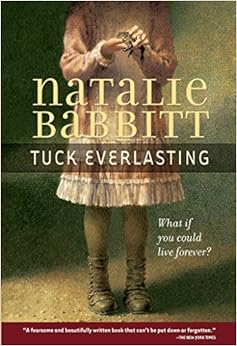
Tuck Everlasting by Natalie Babbitt is a fantasy quest tale. The main character, Winnie, dreams of running away and her curious nature leads her to new friends and an adventure away from home. Winnie grows up along her journey and makes sacrifices that show just what kind of a person she really is inside. The outcome is that she comes home a wiser person and is able to make life changing choices. Winnie's experiences help her understand her internal struggles and not just an outer enemy. I can see using this book in a 4th or 5th grade classroom. Students can practice persuasive techniques by creating an original commercial to convince people to purchase "eternal life" water. Also, the prologue provides the reader with a mentor text for creating a descriptive setting.


Science Fiction differs from fantasy in that the future realities are based in scientific principles. The setting is in the future and makes the reader think, "If this, then what?" The events in the story show evidence of technology. The Hunger Games trilogy by Suzanne Collins is a great example of science fiction. This series works well for 7th grade level and up due to the violent nature of it. 

During class, I enjoyed the student presentation of fantastical literature. In order to help students learn the difference between fantasy and science fiction, the teacher could design a game for students to play. Students could be given a book to examine and then decide the genre based on the literary element criteria of each. The students can provide evidence of their claims using specific details. I also liked the idea of playing pictionary with a partner to reinforce the genres of common novels that children recognize. 


Monday, October 6, 2014

Using Digital Storytelling with Historical Fiction


I created a digital photostory to summarize Nory Ryan's Song by Patricia Reilly Giff. Pairing historical fiction with primary sources is very effective for students to gain an understanding of the time period. Therefore, I researched the potato famine and added facts to enhance my presentation.

Poetry Reflection


"A poem begins in delight and ends in wisdom." - Robert Frost

When you first read the poem, you might hear rich language and interesting pauses. Then the more you read, you connect the words, emotions, feelings, and rhythm to consider the overall message. There is an understanding that develops by the end. It all works together.